Kubernetes in Production: Lessons Learned
Practical insights from running Kubernetes clusters in production for enterprise clients.
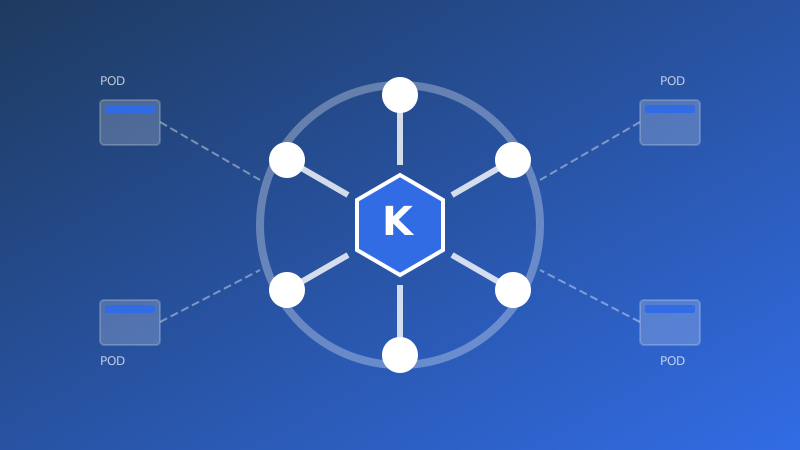
Kubernetes has become the de facto standard for container orchestration. But running Kubernetes in production requires careful planning and operational excellence. Here are lessons we've learned from managing production clusters.
Cluster Architecture
Multi-cluster Strategy
Don't put all workloads in one cluster. Separate by environment (dev/staging/prod) and by sensitivity (internal/customer-facing).
Node Pools
Use different node pools for different workload types. CPU-intensive, memory-intensive, and GPU workloads have different requirements.
High Availability
Run multiple control plane nodes across availability zones. Losing a control plane shouldn't impact running workloads.
Security Hardening
Network Policies
Implement least-privilege network access. Default deny with explicit allows.
Pod Security Standards
Enforce security contexts. Run containers as non-root, with read-only file systems where possible.
Secrets Management
Don't store secrets in etcd plaintext. Use external secret stores like HashiCorp Vault or cloud provider solutions.
RBAC
Implement granular access controls. Regular audits of permissions are essential.
Observability
Metrics
Prometheus for metrics collection, Grafana for visualization. Define alerts based on SLOs, not just technical thresholds.
Logging
Centralized logging with structured output. Include trace IDs for request correlation.
Tracing
Distributed tracing with OpenTelemetry or Jaeger. Essential for debugging microservices architectures.
Resource Management
Requests and Limits
Always set resource requests. Limits are situational but generally recommended for production.
Horizontal Pod Autoscaling
Configure HPA based on relevant metrics. CPU isn't always the best signal.
Pod Disruption Budgets
Protect availability during cluster maintenance with PDBs.
Deployment Strategies
GitOps
Use tools like ArgoCD or Flux for declarative deployments. All changes flow through git.
Progressive Delivery
Implement canary deployments for critical services. Roll back automatically on error rate increases.
Blue-Green Deployments
For stateless services, blue-green enables instant rollback.
Operational Excellence
Regular Upgrades
Keep clusters updated. Security patches and bug fixes are released frequently.
Disaster Recovery
Test recovery procedures regularly. Document runbooks for common failure scenarios.
Cost Optimization
Monitor resource utilization. Right-size workloads and implement spot instances where appropriate.
Conclusion
Kubernetes is powerful but complex. Investing in operational excellence pays dividends in reliability and developer productivity.
Want to discuss this topic?
Schedule a call with our engineering team to explore how these concepts apply to your project.