Connected Vehicles: The Future of Automotive Software
Exploring the technical challenges and opportunities in building connected vehicle platforms.
The automotive industry is undergoing a fundamental transformation. Modern vehicles are becoming software-defined, with connected features becoming standard. This shift creates both challenges and opportunities for software teams.
The Connected Vehicle Landscape
Today's connected vehicles generate massive amounts of data:
- Telemetry data (speed, location, fuel level)
- Diagnostic information (error codes, sensor readings)
- Driver behavior data
- Environmental data
Processing this data in real-time enables features like:
- Predictive maintenance
- Remote diagnostics
- Over-the-air updates
- Usage-based insurance
- Fleet management
Technical Architecture
Building a connected vehicle platform requires expertise across multiple domains:
Edge Computing
Some processing must happen in the vehicle. Edge devices filter and pre-process data before transmission.
Reliable Connectivity
Vehicles move through areas with varying network coverage. Systems must handle intermittent connectivity gracefully.
Stream Processing
Real-time analytics require stream processing architectures. Technologies like Kafka and Flink are essential.
Time-Series Databases
Vehicle data is inherently temporal. Specialized databases like TimescaleDB or InfluxDB are optimized for this workload.
Safety and Security
Automotive software operates in safety-critical environments:
Functional Safety
Systems must comply with ISO 26262. This influences architecture, development processes, and testing.
Cybersecurity
Connected vehicles are attack targets. Defense in depth, secure boot, and encrypted communications are essential.
Privacy
Vehicle data can be highly personal. GDPR and similar regulations apply. Clear data governance is required.
Our Experience
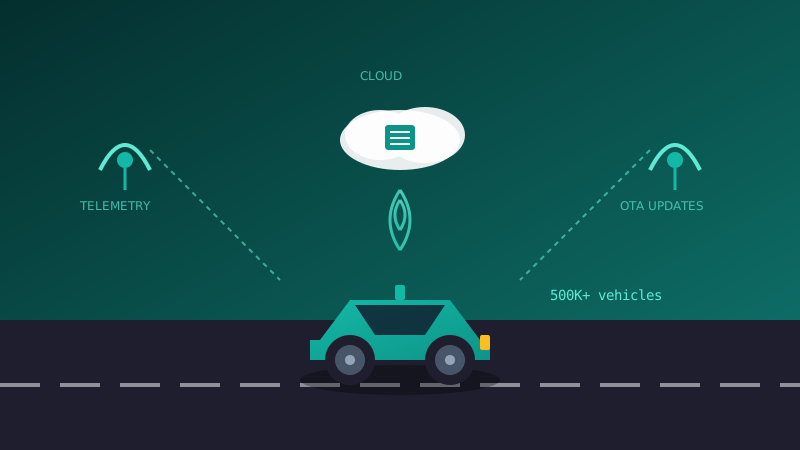
We've built connected vehicle platforms processing data from over 500,000 vehicles. Key learnings include:
- **Design for scale from day one**: Automotive deployments grow quickly. Architecture must support this growth.
- **Embrace standards**: AUTOSAR, CAN, and other automotive standards exist for good reasons. Work with them, not against them.
- **Invest in simulation**: Testing with actual vehicles is expensive. Robust simulation environments accelerate development.
The Road Ahead
The connected vehicle market continues to grow. Autonomous features, V2X communication, and new mobility services will drive further innovation.
Software teams that build expertise in this domain now will be well-positioned for the future.
Want to discuss this topic?
Schedule a call with our engineering team to explore how these concepts apply to your project.